Does this concern you?
- Affected: organisations with an APIM instance on a Classic tier. Microsoft links exposure to setups that stored secrets directly in APIM instead of referencing Azure Key Vault, or ignored its network guidance.
- Skip it if: API Management is not in your Azure subscriptions, or only newer tiers are: Microsoft says v2 was not affected, and NSM says v2 and Consumption are not vulnerable.
What to do
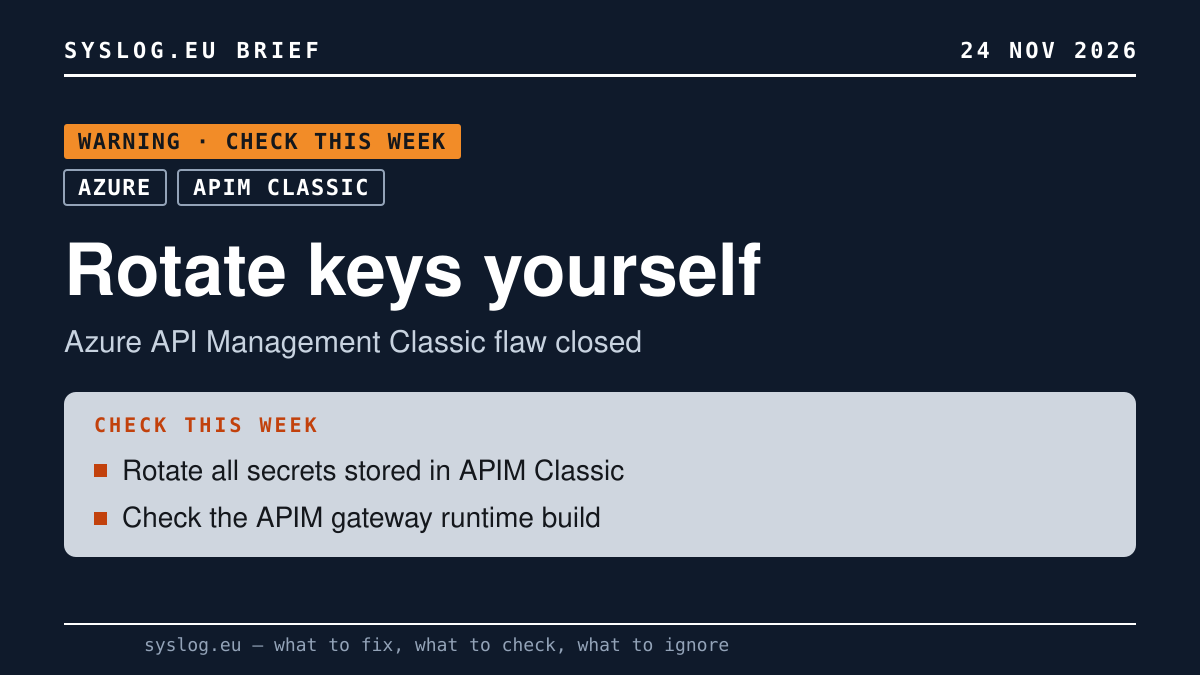
- Treat everything stored in APIM as exposed, as NSM advises, and rotate it. Microsoft lists named values, identity-provider and OpenID Connect client secrets, subscription keys and management API tokens; its fix does not invalidate customer credentials, BleepingComputer reports. Anders Kristiansen adds referenced Key Vault secrets and tenant access keys.
- Check the gateway runtime: NSM lists 0.52.x as patched from build 31936 and 0.53.x from 31938. If lower, contact Microsoft.
- Map the systems behind each instance; a stolen credential may work directly against them, Kristiansen notes. Include forgotten test instances.
- Switch off the retired direct Management API (Management API > Enable Management REST API: No), Kristiansen advises; its calls are not in the Activity log.
- Already hit? Review app sign-ins and Key Vault reads by the apps whose secrets APIM held, as far back as logs go and up to your rotation. One administrator reported a Key Vault login with a valid admin token that did not match normal behaviour.
What we know – and what we don't
- NSM says the flaw affects several sectors in Norway and abroad, the extent of exploitation is unclear, and more attackers may try it now that it is public.
- Conflict: LavX, citing The Register, writes that attackers stole secrets from at least two energy companies; Equinor says it found no sign data was stolen or altered, Skagerak Energi no sign information was compromised.
- Conflict: Microsoft said its mitigation needed no customer action, BleepingComputer reports; NSM tells customers to check the runtime version.
- Microsoft's public guidance on replacing credentials does not link the flaw to the Norwegian attacks. No CVE has been published.
Why it matters
In our view this goes beyond APIM: when a cloud provider closes a hole, keys stolen before the fix still open the doors behind it. Rotation stays the customer's job.